EXPLORING THE EVOLUTION OF HACKTIVISM AS A FORM OF DIGITAL ACTIVISM IN THE MODERN ERA.

Hacktivism has evolved in the internet age from small website defacements to a complex array of tactics, including data leaks and denial of service campaigns. This evolution reflects changes in tactics, targets, and ethics as the internet matured, highlighting both the benefits of global collaboration and the risks of misinformation and legal consequences.
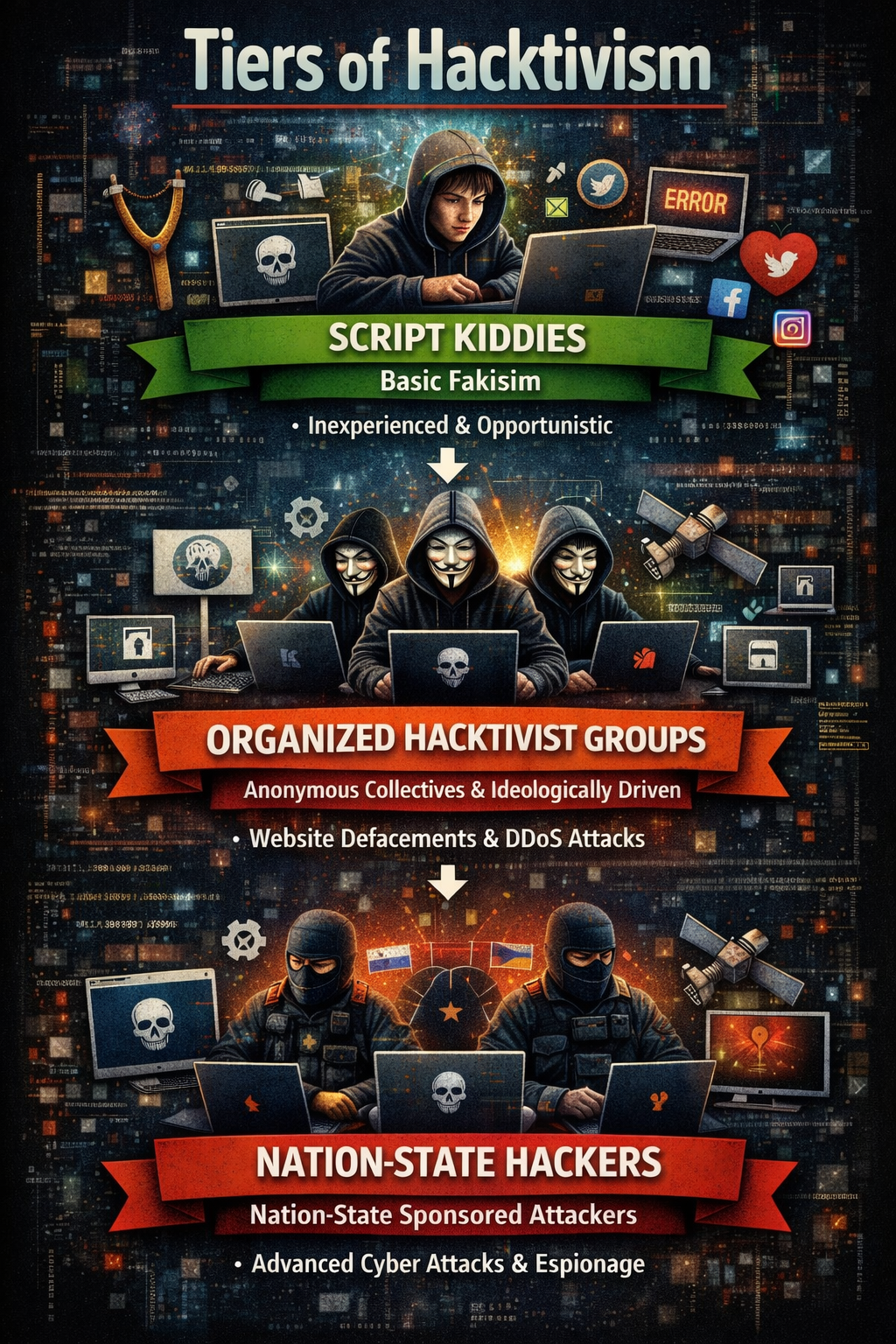
Key points outline this shift in hacktivism's landscape.
The Evolution of Hacktivism
- Transformation of Activism: Hacktivism has shifted from local computer communities to global networks due to the internet. Modern platforms enable rapid mobilization, leading to swarm operations where participants undertake simultaneous actions without centralized control. This enhances speed but introduces volatility due to varying ethical standards among participants.
- Evolving Tactics: In the 1990s and early 2000s, website defacements were common, but as organizations strengthened their defenses, hacktivism evolved. Strategies now focus on disruption techniques, like denial-of-service attacks, to create leverage and draw media attention.While these tactics demonstrate capability, they risk affecting bystanders by disrupting essential services.
- Data leaks transitioned from mere spectacle to impactful evidence, exposing internal information and holding institutions accountable. However, they raise ethical concerns like doxxing and the release of sensitive data. The internet enhances the impact of leaks through searchable archives and collaborative analysis, while the public demands verification and context.
- As governments strengthened cyber surveillance, hacktivists adopted better operational security through encryption tools, enabling anonymous participation. This increased engagement but also allowed for scams and infiltration. The culture evolved to prioritize identity protection and data minimization, complicating public views on hacktivism.
- Social media has shifted hacktivism from technical actions to narrative warfare, where compelling stories are crucial for visibility. Breaches without strong messaging can be overlooked, while effective communication can dominate discussions. This environment incentivizes exaggeration and selective disclosures, allowing governments to counteract narratives with misinformation.
The landscape of hacktivism has evolved significantly:
- Expanded Targets: Hacktivists now focus on platforms, supply chains, and critical information systems, not just public websites. This shift means that vulnerabilities in one vendor can impact multiple organizations and potentially endanger essential services like hospitals.
- Open-Source Intelligence (OSINT): Many activists use OSINT for campaigns, analysing public records and data rather than unauthorized access. This method raises ethical concerns about privacy and the potential for misidentification, leading to a need for rigorous peer review and careful communication.
- Ransomware and Credibility Crisis: The rise of financially motivated cybercrime complicates the distinction between genuine hacktivism and opportunistic extortion. As some groups claim ideological motives to mask criminal activities, it becomes crucial for political movements to maintain credibility by rejecting monetization and being transparent about their methods.
State Involvement in Hacktivism:
- Hacktivism has evolved from grassroots to a tool for state influence.
- States may support “patriotic hackers” for disruptive actions aligned with national interests.
- This shift increases sophistication but risks for participants, who may face prosecution or be treated as combatants.
- Platform Governance as a Battleground:
- Hacktivist efforts now target the infrastructure of discourse, pressing platforms on content moderation.
- Activists create alternatives or engage in reporting campaigns to resist censorship.
- Control often lies with private companies through terms of service, prompting varied hacktivist responses.
- Mature Ethical Frameworks:
- Hacktivist communities focus on harm reduction, consent, and proportionality.
- Important questions arise regarding disruption and data leaks, with a push for responsible disclosure and minimizing personal data exposure.
- Future of Hybrid Activism:
- Hacktivism is evolving towards hybrid activism that integrates technical skills with legal and community efforts.
- Movements focus on building tools, supporting at-risk communities, and documenting abuses, while offensive actions become more selective and evidence driven.
Challenges from AI and deepfakes increase the need for authenticity checks and ethical considerations.
Practical takeaways for understanding hacktism in the internet age
- Recognize the tactic spectrum, hacktivism ranges from legal OSINT and archiving to illegal intrusion and disruption. Lumping everything together hides important differences in risk, harm, and intent.
- Follow the infrastructure, modern campaigns often target or depend on third parties like clouds, identity providers, registrars, and social platforms. Impact frequently propagates through these dependencies.
- Demand verification and context, screenshots and selective excerpts can mislead. Look for hashes, primary documents, timelines, corroboration, and clear provenance wherever possible.
- Consider proportionality, even politically motivated actions can create real world harm. Evaluate whether the method matches the claim and whether alternatives existed.
- Watch for opportunism, ideological branding can be used to hide extortion, fraud, or influence operations. Motive signals include monetization, indiscriminate dumping, and pressure tactics unrelated to stated goals.
- Track how narratives spread, in the internet age, the story around an operation can matter as much as the technical details. Identify who amplifies it, who benefits, and what corrections occur.
Takeaways - Understanding Hacktivism in the Digital Age
Hacktivism in today's internet landscape can be seen as a continuously evolving set of strategies for challenging authority within digital realms. Its transformation mirrors the broader development of the internet itself, transitioning from open experimentation to platform centralization, from small communities to expansive global networks, and from basic web pages to intricate supply chains and cloud infrastructures.
An important observation is that lower-tier hacktivists are beginning to rise through the ranks as they become aware of the financial incentives. This presents an increasing threat, as a growing number of players are engaging in extortionate activities.
Whether regarded as a form of accountability, civil disobedience, or unacceptable coercion, hacktivism has become an integral aspect of contemporary politics. Its future will be influenced by the ongoing struggle between security, privacy, freedom of expression, and the public's demand for reliable evidence.